
Power Industry Ball Valves


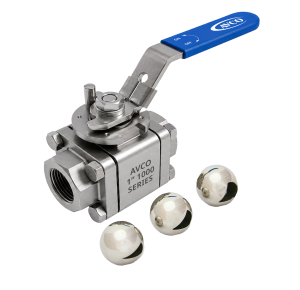
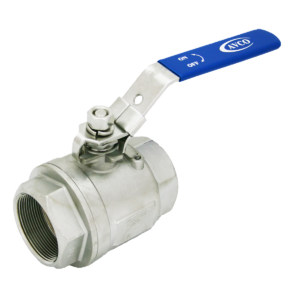
Ball valves play a critical role in modern power generation facilities where safe isolation, emissions control, and high-pressure system reliability are operational priorities. When paired with an actuator, the quick quarter-turn operation of ball valves enable reliable operation and fast shutoff, making ball valves ideal for safety-critical and emergency isolation applications. Ball valves require minimal maintenance due to their simple design and robust construction. Compared to other types of valves, ball valves deliver bubble tight sealing, low torque, and long service life all which helps minimize downtime.
Engineering firms commonly integrate floating and trunnion ball valves into piping systems due to their ability to achieve repeatable zero leakage performance under fluctuating pressure and temperature conditions. Metal seated ball valves are deployed in severe service environments where particulate contamination or elevated temperatures exceed the limitations of soft seated valves. Additionally, cryogenic ball valves are deployed in LNG and low-temperature natural gas service where sealing integrity must be maintained despite thermal contraction.
Ball valves provide dependable isolation and quick-shutdown functionality in piping systems throughout power plants. Floating ball valves are commonly used in smaller diameter natural gas and auxiliary steam service lines, while trunnion mounted designs are specified for larger pipelines where larger flow rates and pressure classes are required. The ability of ball valves to maintain tight shutoff under differential pressure improves safety during maintenance activities and supports compliance with plant lockout/tagout procedures.
In steam service applications, ball valves provide stable sealing performance that helps prevent energy loss and protects downstream instrumentation. These valves are also well suited for ambient natural gas distribution systems due to their bidirectional sealing capability and resistance to seat deformation under load. Common installation points include turbine fuel gas manifolds, HRSG bypass lines, feedwater systems, cooling loop isolation points, and vent & drain applications.
Valve designs must adhere to ASME B16.34 and other applicable standards. It is critical to consider temperature variations from cryogenic through high temperatures. Valve designs must consider specific dimensions and tolerances to ensure proper valve operation across the intended operating temperature range.
Cryogenic floating ball valves require a ball vented to the high-pressure side of the valve. Cryogenic trunnion ball valves relieve pressure through the upstream seat and does not require a vented ball. Both types of valves are fitted with an extended stem to prevent freezing around the manual or automated operators and to allow for easy application of insulation around the valve body.
Appropriate valve alloys include carbon steel, stainless steel, and even nickel-based alloy materials such as Hastelloy C and Monel when corrosion-resistant materials are required to withstand harsh conditions in power applications. Seat and seal options vary based on media compatibility and operating temperature. Live-loaded stem packing and blowout-proof stem designs further enhance reliability and minimize fugitive emissions.
Full-port, or full bore, ball valves provide a bore that matches the nominal pipe size. This minimizes the pressure drop thus conserving energy within the system and reducing ongoing costs. Reduced-port, or reduced bore, ball valves offer a cost-effective initial purchasing option. However, they may result in higher long-term operational costs due to the pressure drop resulting from the small valve bore compared to the pipe diameter. This long-term cost consideration is important in power generation operations.
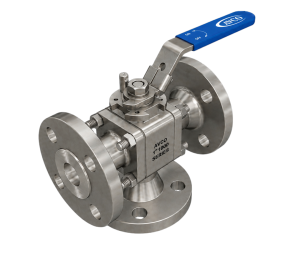
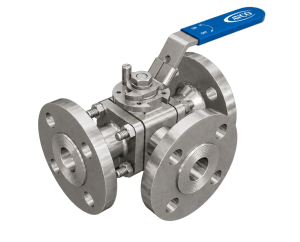
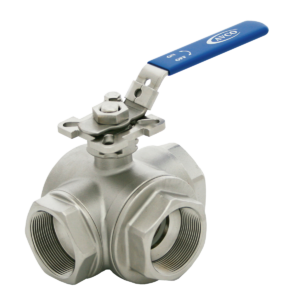
Multi-port ball valves enable flow diversion or mixing within a single valve body. These configurations reduce piping complexity, minimize leak paths, and improve system efficiency in oil and gas processing facilities. They are available in side entry and bottom entry configurations.
Drain valves are critical for removing condensate during startup and shutdown cycles. Floating ball valves are often used at low-point drains to facilitate efficient condensate removal and prevent water hammer conditions that can damage equipment and piping.
Bleed valves installed adjacent to isolation valves and on the trunnion valve bodies allow for pressure equalization across the ball prior to actuation, reducing seat wear and operating torque. Strategic placement of vent and drain valves helps prevent water hammer and improves overall system safety and efficiency.
Port size selection significantly impacts Cv, pressure drop, and operating costs. Full port ball valves are typically specified for fuel gas and main steam isolation to minimize restriction and energy loss as they will match the pipe bore when fully open.
Control valves containing a v-ball are used when precise control of fluid flow is required. When coupled with a positioner, it is possible obtain precise flow control and modulation to optimize system efficiency while still achieving full shut-off when required.
High pressure ball valves are built to handle critical operating pressures in steam generation and distribution.
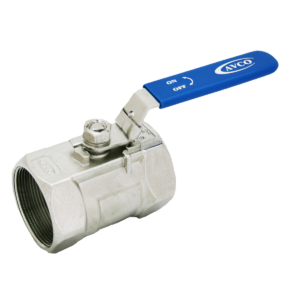
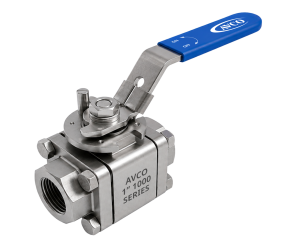
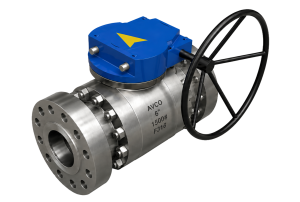
A lever handle is sufficient for manual operation of floating ball valves. A gear operator may be used for valves with metal or hard elastomer seats such as PEEK or PCTFE. Trunnion-mounted ball valves are commonly specified with gear operators for manual operation.
The low operating torque of ball valves makes them easy to automate with electric or pneumatic actuators. Ball valves are easier to automate than multi-turn and rising stem valves due to their simple 90-degree turn operation. Both pneumatic and electric actuators can be configured for fail safe actuation. This is critical for safe ball valve operations in critical applications when a valve must ensure safe media flow or shut off when there is power or signal loss.
Pneumatic actuators are fast acting, have low initial cost, and ideal when there is no local power source. Electric actuators are used when compressed air is unavailable. Electric actuators provide precise flow control and electronic signals without the use of additional accessories.
All valves should be designed to ASME B16.34 which is the industry standard for ball valve design. It covers design, ratings, materials, testing, and more. (asme.org). Since many of the valves will handle fuel, valves often must carry a fire-safe rating to API 607 (api.org. All valves should be seat and shell pressure tested by API 598.
Cryogenic valve designs should be tested by BS 6364, MSS SP-134 (msshq.org), or ISO 28921-1 (iso.org) to show they are capable of sealing at operational temperatures. Usually a single test proving the design is sufficient as the cryogenic tests are expensive and time consuming.
An EN 10204 3.1 Mill Test and Inspection Certificate may be required to show material traceability through tracking of heat numbers for each lot processed. The report includes chemical composition and specific strength test results on the actual lot of metal components used for that specific order.
Check valves prevent reverse flow conditions that could damage pumps, compressors, or heat exchangers in power plant piping systems. Proper coordination between check valves and ball valves enhances isolation performance and minimizes pressure surges during shutdown events.
As the piping system cools in a cryogenic system, the pipes will contract. Expansion joints or flexible hose must be used to prevent valve and flange bolts getting pulled apart and causing leaks. Insulating the valves and pipes will help maintain a more consistent temperature in the system, thus reducing operating costs.
Repairing floating ball valves can be done with relative ease due to their design, which allows for easy access to the seats of the valve. Routine leakage inspections and operational cycling of all ball valves should be performed at each shut down. It is suggested to purchase repair kits for valves at the time of valve purchase.