
Pharmaceutical and Food & Beverage Sanitary Ball Valves
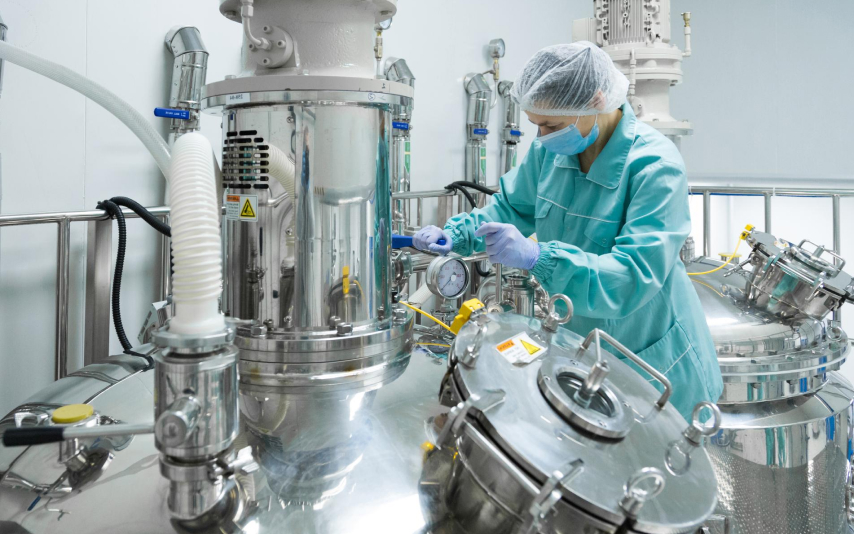
Sanitary ball valves are precision-engineered flow control devices designed for hygienic processing environments such as pharmaceutical manufacturing, biotechnology, dairy processing, beverage production, and nutraceuticals where cleanliness, sterility, and product integrity are critical. Their core function is to provide reliable on/off or diverting flow control while preventing contamination in high-purity systems. These valves are widely used in pharmaceutical manufacturing, biotechnology, dairy processing, beverage production, nutraceuticals, and clean-in-place (CIP) systems.
In pharmaceutical and food & beverage facilities, sanitary ball valves are usually required to meet ASME BPE and FDA compliance. Their smooth internal surfaces, crevice-free construction, and cleanable geometries minimize bacterial growth and support regulatory compliance. Whether used in sterile drug production or aseptic beverage filling, stainless steel sanitary ball valves help ensure process consistency, batch integrity, and product safety.
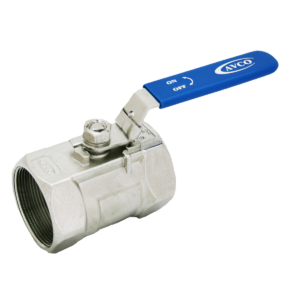
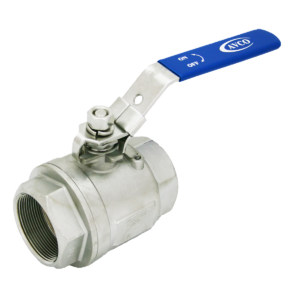
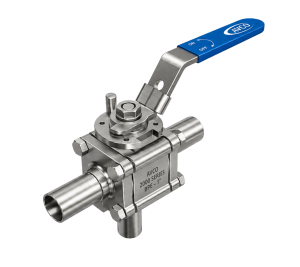
2-way sanitary ball valves provide reliable on/off flow control. They are the most common configuration in hygienic processing lines for pharmaceutical liquids, dairy products, juices, syrups, and purified water systems.
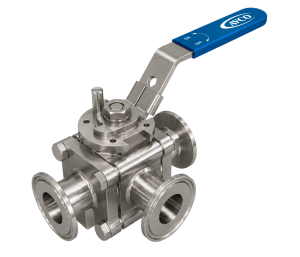
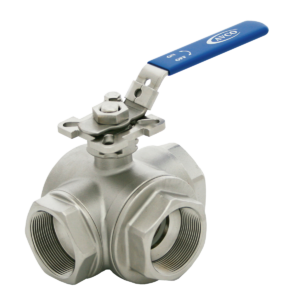
3-way sanitary balls valve allow for mixing or diverting flow. Available in L-port and T-port designs, these valves reduce the need for multiple 2-way valves and tees. 3-way valves are ideal for ingredient blending, media switching, and CIP return loops.
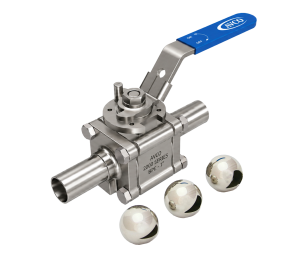
Full port sanitary ball valves – valves with a full bore design to match the tube diameter and enable full fluid flow with minimal pressure drop, prevents product buildup of viscous liquids, food products, and high-purity pharmaceutical fluids. It also makes cleaning easy compared to reduced bore valves.
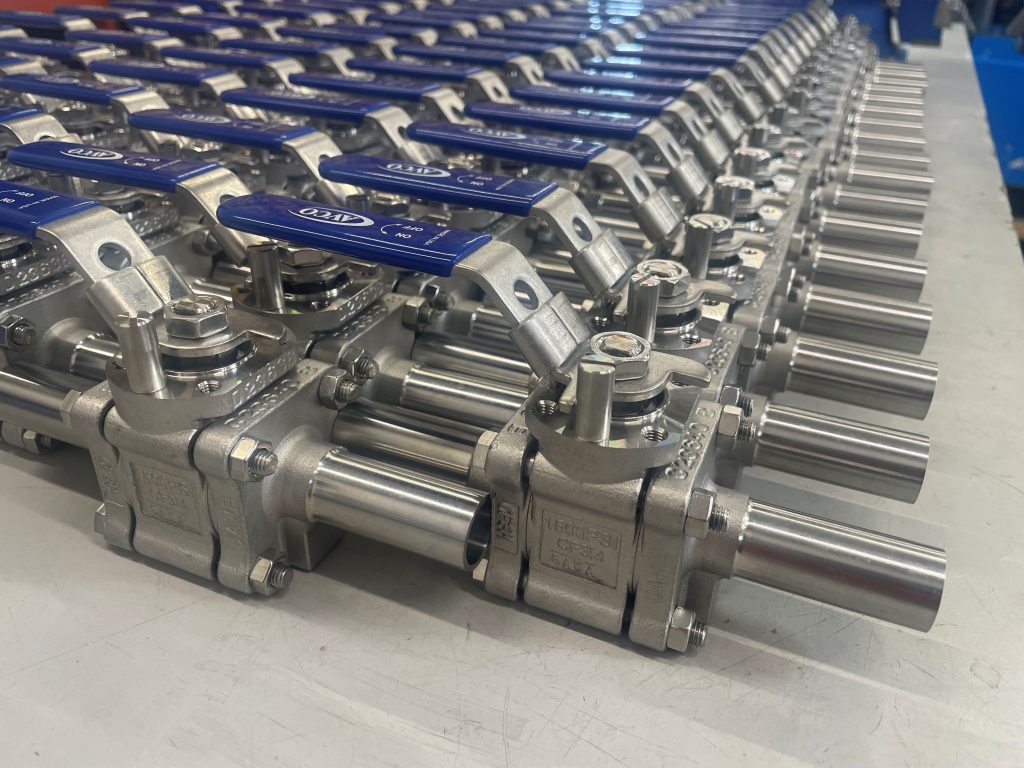 Most sanitary ball valves are manufactured from 316L stainless steel due to its enhanced corrosion resistance and compatibility with aggressive cleaning agents and high-purity media. Electropolished finishes are often specified in sterile pharmaceutical systems to further enhance corrosion resistance and cleanability.
Interior surface finish is critical in hygienic valve selection. Food and beverage systems often require Ra ≤ 32 µin (0.8 µm) while pharmaceutical applications commonly require Ra ≤ 20 µin (0.5 µm) as standard. Ra ≤ 15 µin (0.4 µm) is achievable with electropolishing. Smooth surfaces reduce microbial adhesion and facilitate effective CIP and SIP (steam-in-place) validation.
The most common three piece hygienic valve connection types are tri-clamp (tri-clover), extended tube, and compression fitting end connections. Each offers distinct advantages depending on cleanability, validation, maintenance strategy, and long-term plant design.
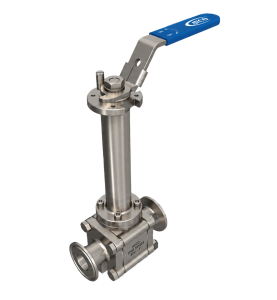
Tri-clamp ball valves are the most widely used hygienic end connection in pharmaceutical and food processing facilities. They consist of two ferrules, a sanitary gasket, and a clamp that compresses the assembly into a leak-tight seal. In facilities where equipment is frequently removed for cleaning, maintenance, or process changes, tri-clamp ball valves provide unmatched convenience.
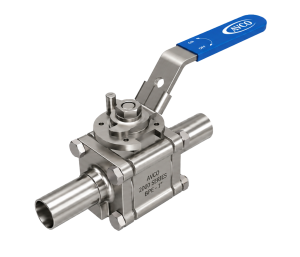
Extended tube end connections are permanently welded into hygienic piping systems. The extended tubing allows automated orbital welding while protecting valve seals from heat damage. The benefits include permanent installation lower leak risks, no crevices or gasket interfaces, and superior cleanability. Although maintenance is less convenient than tri-clamp ball valves, the long-term hygienic integrity is often superior.
For smaller tube sizes from 1/4″ – 1″, compression fittings create a leak-tight seal using ferrules that compress around the tubing when the nut is tightened. This design allows sanitary ball valves to be installed quickly without welding. These sizes are commonly used in instrumentation, sampling ports, clean utility systems, and analytical process lines in pharmaceutical and biotech facilities. For these smaller diameters, compression tube connections often provide a more practical solution than tri-clamp or welded pipe systems.
Sanitary ball valves are available in nominal sizes typically ranging from 1/4” to 4”, depending on process requirements. They feature a full-bore design that enables full fluid flow with minimal pressure drop. It is important to check process requirements to know what end connections and surface finish is required.
Pressure and temperature ratings vary by seat material and design. Pharmaceutical steam sterilization may require valves capable of withstanding elevated temperatures, while beverage systems may prioritize pressure stability during carbonation or pasteurization. In most cases TFM is the preferred seat material due to its wide temperature range and inert qualities. In pharmaceutical applications, the seats and seals must meet FDA and USP Class VI requirements.
Project specification sheets should be submitted with the quote request as they contain material requirements and other information that the manufacturer can review to recommend the correct valve.
Sanitary ball valves can be operated manually or automatically depending on the configuration. Lever or oval handles are typical for manual operation. For automated operation, actuators are sized based on the valve torque at full differential pressure plus a safety factor, available air or power supply, and site conditions. Pneumatic actuators are fast acting and have low initial cost. Accessories such as solenoids, limit switches and positioners may be added to enable remote monitoring and automated control of ball valves. Electric actuators have lower operational costs and are used when compressed air is unavailable. They come with internal switches that provide controlled flow and electronic signals.
Both pneumatic and electric actuators come standard with ISO 5211 mounting dimensions. They can be configured for fail safe actuation to return to a full open or full close position. This is critical for optimal performance where spoilage or product waste is a concern if there is a loss of power or signal.
Prior to installation, inspect the visible seat and seal to ensure they are in good condition. Do not disassemble the valve for inspection. If an actuator is used, connect it to an air or electric source and test the function. Check that the valve goes to the full open and close positions. Welds should be inspected prior to system start-up. Correct valve alignment is essential for all types of connections. Welds and other connections should be inspected and tested prior to system start-up.
Sanitary ball valves can be easily sterilized and cleaned in place (CIP) or steamed in place (SIP), minimizing downtime and ensuring sanitation compliance.
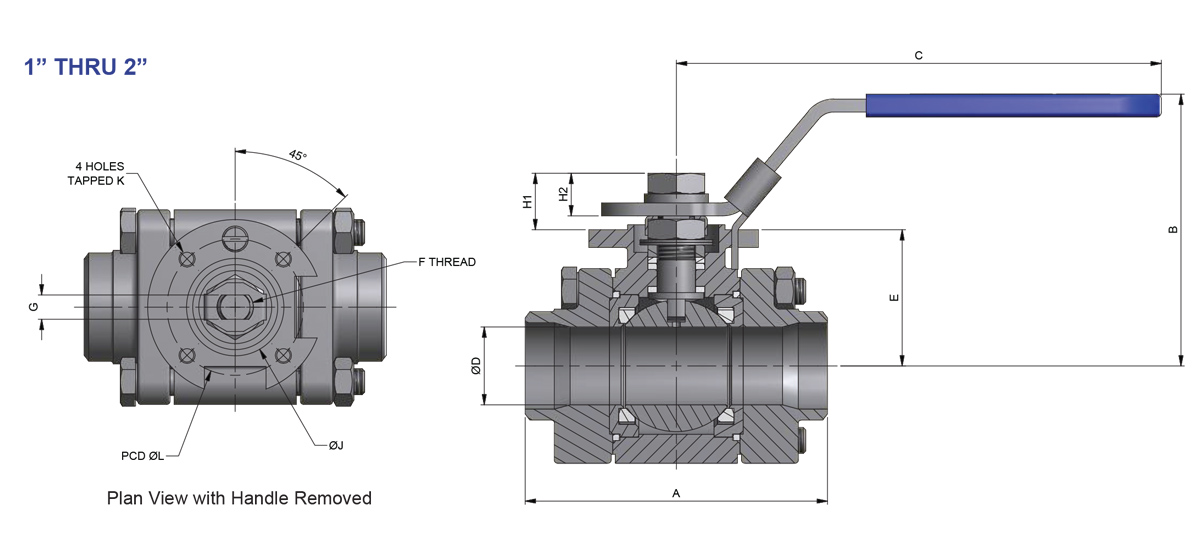
When maintenance is performed, the three-piece design of sanitary ball valves allows for easy access to all valve components, facilitating maintenance. Schedule routine purge and flushing schedules to remove accumulated solids and corrosive materials. Request the IOM manual – or download it from the website, and purchase repair kits or other components needed to repair the valve in the field to avoid unnecessary downtime.