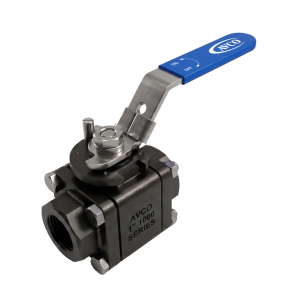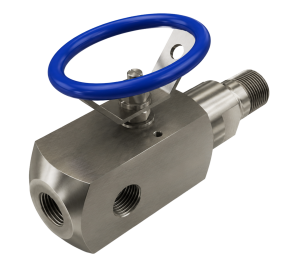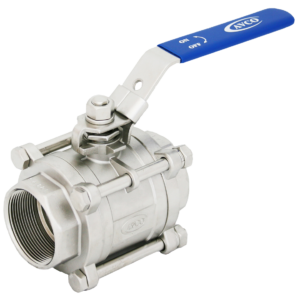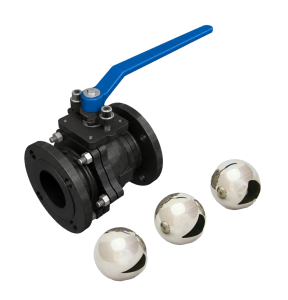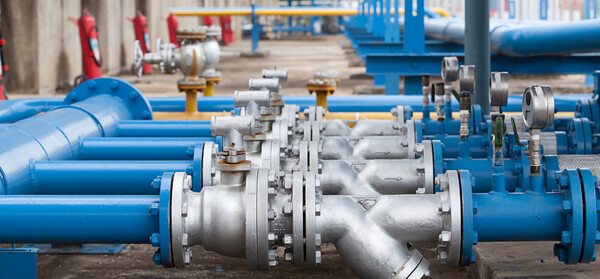

Chemical Industry Ball Valves
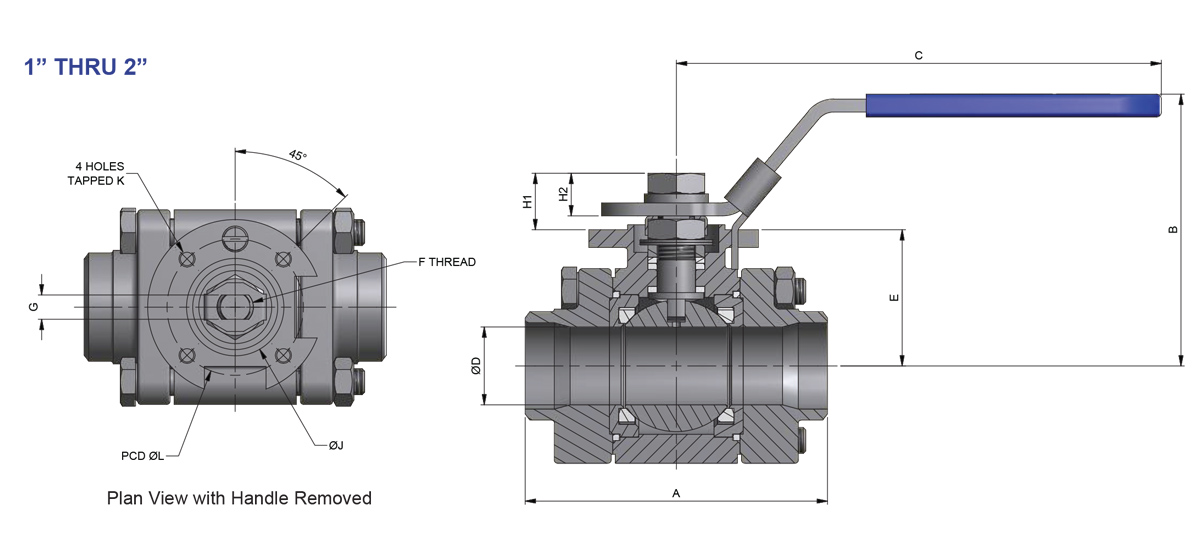
Ball valves play a critical role in the chemical industry where safe, repeatable shutoff and process isolation are required. They will provide reliable performance when utilized in aggressive media, temperature swings, and high-cycle automation environments. Floating ball valves and Trunnion-mounted ball valves are commonly used in chemical manufacturing, specialty chemicals production, and petrochemical processing facilities. Engineers, procurement teams, and maintenance planners tasked with specifying valves for corrosive, hazardous, or high-pressure process systems must take precautions to ensure a suitable valve is selected to ensure safe operation.
Quarter-turn ball valves are widely used to control the flow of acids, solvents, polymers, hydrocarbons, and reactive compounds due to their bubble-tight shutoff capability and low fugitive emission performance. Compared to traditional gate or globe valves, floating and trunnion ball valves offer improved sealing integrity, reduced torque requirements, and compatibility with automated actuation systems used in distributed control systems (DCS) and safety instrumented systems (SIS).
Ball valves operate on a quarter-turn mechanism in which a ball rotates to allow or block process flow media flow. This is an effective design when rapid shutoff of gas or liquid is required. This design differs significantly from multi-turn valves such as gate or globe valves that require multiple rotations to open or close, increasing operational time. Ball valves are also easy to operation, maintain, and offer low resistance to flow. Manual ball valves are commonly deployed for process isolation and maintenance bypass duties, while actuated ball valves—pneumatic or electric—are integrated into automated chemical dosing systems, tank farms, and reactor feed lines.
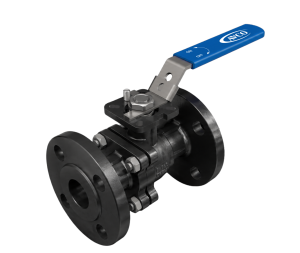
Available in both floating ball and trunnion-mounted configurations, these valves are designed to meet ANSI (www.ansi.org) pressure classes and support demanding process conditions involving corrosive fluids and volatile organic compounds (VOCs). Ball valves have anti-blowout stems, firesafe designs, and antistatic features that enhance safety in volatile environments. Belville spring washers are often used in the external stem area to minimize fugitive emissions and to meet environmental regulations related to VOC emissions. Fugitive emission performance is validated through standardized test methods such as API 641 (www.api.org).
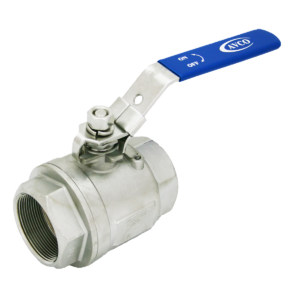
Floating ball valves used in the chemical industry do not require lubrication, which reduces the risk of process contamination. They rely on differential pressure to push the ball into a stationary seat within the valve and create a bubble tight seal. These valves are frequently used in applications involving solvents, water treatment chemicals, and process additives where pressures typically remain below ANSI Class 600. However, high pressure ball valves are available in a floating design up to 2″ and 2500psi. In contrast, trunnion valves have stationary balls positioned on a trunnion support. The trunnion valves have mobile seats that are pushed into the ball to create a bubble tight seal. Designed as higher pressure valves, trunnion ball valves are typically preferred over floating designs in services exceeding ANSI Class 600 or where pipeline diameters exceed 4 inches.
Material selection is critical when specifying ball valves for chemical processing environments due to corrosion risks posed by acids, caustics, and reactive compounds. Carbon steel valves are suitable for noncorrosive hydrocarbon services. Stainless steel ball valves, including 316 and duplex alloys, offer enhanced resistance to chloride-induced corrosion and are commonly used in chemical handling systems. When dealing with acids and other aggressive or oxidizing media, it may be necessary to consider Alloy 20, Hastelloy C, Monel, Inconel, or other alloys that provide strong resistance to chemical oxidation. When considering temperature and pressure, metals are typically more durable and resilient to varying operational conditions compared to polymers in ball valve construction.
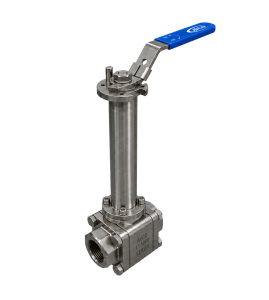
Seat designs utilizing PTFE, RTFE (reinforced PTFE), TFM, PEEK, UHMWPE, and PCTFE improve chemical compatibility and extend valve service life in corrosive environments. Temperature variations should be considered when selecting valve seats as some materials such as UHMWPE have a limited scope, while TFM and PEEK can be used in cryogenic and moderately high temperature applications. Metal seats are used with elevated temperatures or when solids are present in the flow media.
Full port ball valves have bore sizes that match the pipe diameter and allow unrestricted flow, minimizing the pressure drop. They have higher flow capacity, or Cv, compared to other valves.
V-port ball valves are commonly utilized for modulating control in chemical dosing systems. Balls are available with 15, 30, 45, 60, and 90 degree openings to optimize flow and Cv for a specific application.
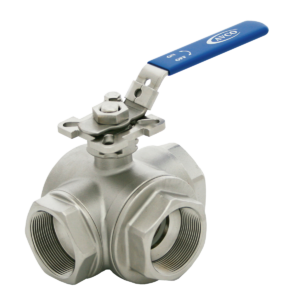
Multiport ball valves enable blending of media streams or flow diversion between storage tanks. They are available in bottom entry and side entry configurations.
Valve selection should consider pressure class, operating temperature, and chemical compatibility with body and seat materials. The right seat and seal in ball valves can make an enormous difference in functionality, maintenance time, and costs. Compatibility charts provided by manufacturers help in selecting the appropriate materials for ball valves based on the process media.
Ball valves with threaded and flanged connections enable easy removal of the valve when required. Welded connections limit the number of potential leak points in the system.
Actuation methods should be evaluated based on automation requirements and integration with plant control systems. Pneumatic or electric actuators are available for automated valve operation. Options included fail close or fail open positions, voltage, and different environmental enclosures.
All valves should be designed to ASME B16.34 (asme.org) which is the industry standard for ball valve design. Since many of the valves will handle fuel, valves often must carry a fire-safe rating to API 607 (api.org). Pressure testing in accordance with API 598 ensures seat integrity in floating and trunnion-mounted ball valves prior to installation. Routine inspection of seals and actuator assemblies is recommended to prevent process leaks. To prevent contamination from fugitive emissions and meet environmental regulations, valves should meet API 641 or a comparable standard.
An EN 10204 3.1 Mill Test and Inspection Certificate may be required to show material traceability through tracking of heat numbers for each lot processed. The report includes chemical composition and specific strength test results on metal components used for that specific order.
Preventative maintenance programs should include periodic torque checks and stem packing adjustments.