
Oil and Gas Industry Ball Valves

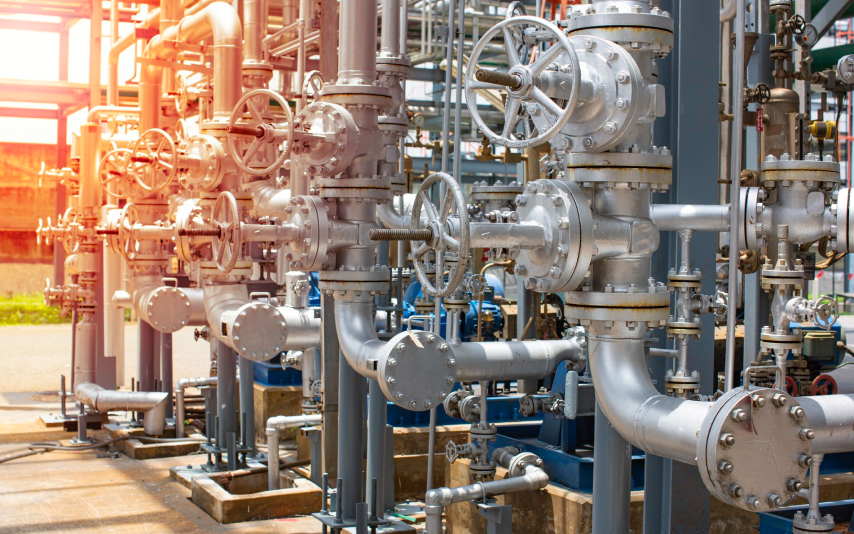
Ball valves are essential components to control flow in refineries & oil and gas systems. They provide dependable isolation for liquids and gases under high pressure and extreme temperatures. The quick quarter-turn operation of ball valves enables fast shutoff, making ball valves ideal for safety-critical and emergency isolation applications. Ball valves require minimal maintenance due to their simple design and robust construction. Compared to other types of valves, ball valves deliver bubble tight sealing, low torque, and long service life in harsh operating conditions.
Ball valves are widely used in the oil and gas sector across upstream, midstream, and downstream operations. Common applications include:
- Wellhead isolation
- Pipeline block valves
- Compressor stations
- Refineries
- Storage terminals
- Offshore platforms
Ball valves are engineered to ensure safety, reduce downtime, and minimize leakage in the areas of oil and gas production, transportation, and refining. Different configurations are available to handle high pressures, corrosive media, and severe service environments.
Oil and gas operations require different ball valve designs depending upon pressure, temperature, and media. While stainless steel and carbon steel can handle most applications, other alloys are used for aggressive media. Ball valves are available in a wide range of sizes and pressure classes, from small-bore process valves to large pipeline valves. Common configurations include floating ball valves, trunnion-mounted ball valves, metal-seated ball valves, full-port ball valves, and multi-port ball valves. Additional flow control is achieved with the use of a v-ball.
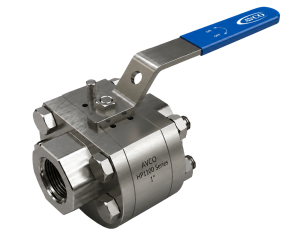
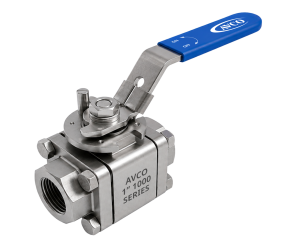
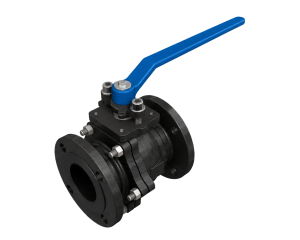
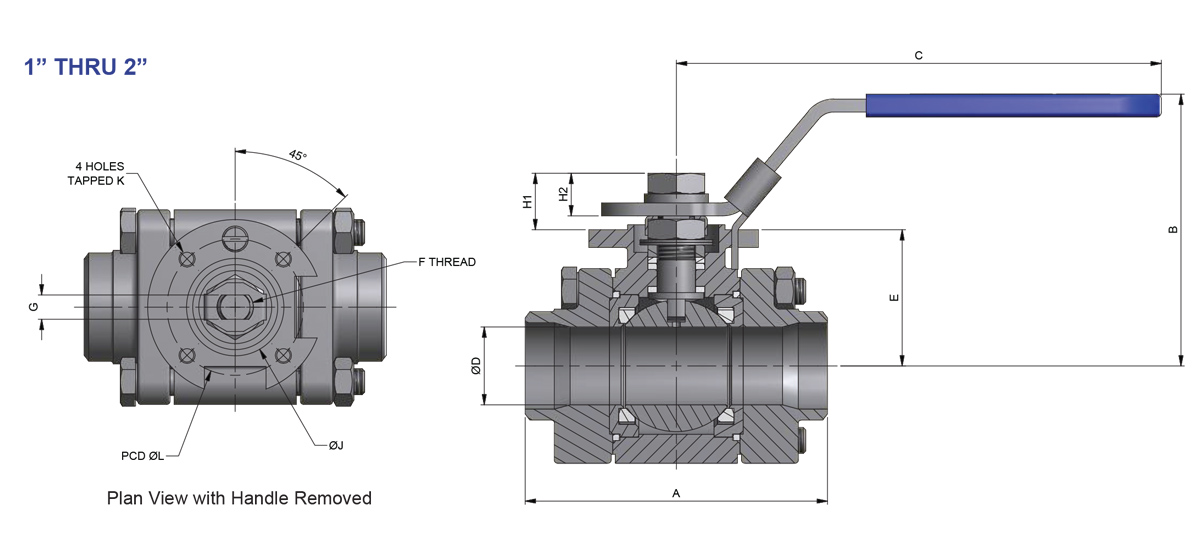
Floating ball valves are designed for smaller diameter piping systems with low to medium pressure ratings. Common end connections are NPT, socket weld, butt weld, and flanged.
This is a low maintenance design allowing for easy field maintenance.
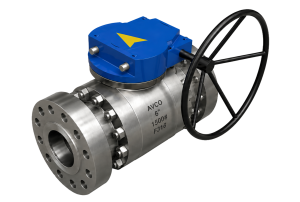
Trunnion ball valves are engineered for large-diameter and high-pressure applications in the oil and gas industry. Flanged, butt weld, or hub connections are common. Having a trunnion supported ball reduces the valve torque which permits smaller actuators, thus lowering total system costs.
Metal-seated ball valves are designed for use with high-temperatures or abrasive media where soft seats will degrade quickly. These ball valves are required when solids are present in the media or operating temperature conditions exceed 550F.
Valve materials such as abrasion-resistant alloys, carbon steel, or hardened stainless steel are typically used. Trim components, discs, and balls may be made from Stellite or hard chrome plated to obtain optimal performance.
Complete, tight shut-off is difficult to achieve with metal seated ball valves. Class IV shutoff typically expected. Specifications should be checked to ensure the leakage rate conforms with the application requirements.
Full-port, or full bore, ball valves provide an unobstructed bore that matches the pipe diameter. This minimizes the pressure drop, conserves energy within the system, and allows for pigging operations. Reduced-port, or reduced bore, ball valves offer a compact, cost-effective initial purchasing option. However, they may result in higher long-term operational costs due to the pressure drop resulting from the small valve bore compared to the pipe diameter. This long-term cost consideration is important in refineries and the oil and gas industry.
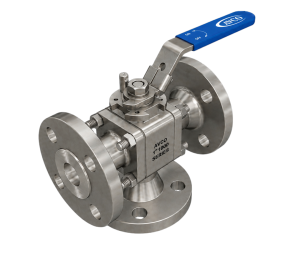
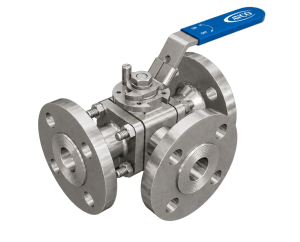
Multi-port ball valves enable flow diversion or mixing within a single valve body. These configurations reduce piping complexity, minimize leak paths, and improve system efficiency in oil and gas processing facilities. They are available as side entry, bottom entry, L-port, T-port, and X-port configurations.
Ball valves with threaded and flanged connections enable easy removal of the valve when required. Welded connections limit the number of potential leak points in the system. Material selection should account for temperature, corrosion resistance, sour service compliance, offshore exposure, and the process media. Typical body and end materials are carbon steel, stainless steel, and other chemical resistant nickel alloy steels. Trim materials include PTFE, TFM, PEEK, PCTFE, and Stellite Metal.
Pressure rating selection of ball valves should be based on maximum design pressure and temperature. Choosing the appropriate ASME pressure class ensures safe and reliable operation, and checking material compatibility between the valves and media will avoid premature failures.
Ball valves used in the oil and gas sector must comply with recognized industry standards to ensure safety and performance. Common specifications include API (api.org), ASME (asme.org), and ISO (ampp.org) standards governing design, testing, fire safety, and pressure containment.
Product datasheets should clearly indicate compliance with applicable standards such as:
- ASME B16.34 which is the global standard for ball valve design. It covers design, ratings, materials, testing, and more.
- API 6D is the primary standard for pipeline valves in the oil and gas industry.
- API 607 for fire safe applications
- API 608 for anti-static ball and stem strength
- NACE MR0175 to prevent stress cracking in sour service
Ball valves can be easily automated, offering remote control and monitoring capabilities. Actuators are sized with a safety factor and the assumption that ball valves will operate at full differential pressure. Available air or power supply, and site conditions must be considered too. Pneumatic actuators are fast acting, have low initial cost, and are well suited for hazardous environments. Electric actuators have lower operational costs and are used when compressed air is unavailable. They provide controlled flow and electronic signals without the use of additional accessories.
Both pneumatic and electric actuators can be configured for fail safe actuation. This is critical for safe ball valve operations in refinery or oil and gas operations when a valve must ensure safe media flow or shut off when there is power or signal loss.
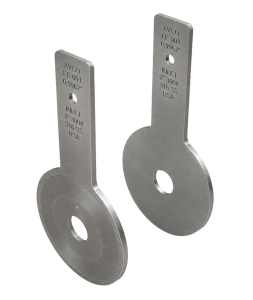
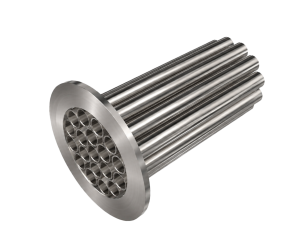
Gas and fluid flow measurement is critical for custody transfer, process control, and efficiency monitoring in refinery and oil and gas operations. Orifice plates, orifice spools, and meter runs are widely used due to their simplicity and reliability when handling crude oil, natural gas, steam, and other media.
Plates are designed for flow control or to achieve a specific pressure drop. Proper installation and adherence to straight-run requirements are essential for measurement accuracy.
Fixed-geometry flow measurement solutions offer long service life, minimal maintenance, and consistent performance in harsh environments, making them a trusted choice for refinery and oil and gas applications.